A Simple Care Routine for Preserved Moss Wall Art
Preserved moss wall art brings a slice of nature indoors without the watering, pruning, or sunlight demands of live plants. Once installed, a well-crafted piece can stay visually appealing for years with very little effort. Yet "no care" is not quite the same as "no thought." A few small habits make the difference between a piece that stays vibrant and one that gradually fades or gathers dust.
This article covers the straightforward checks that keep your preserved moss looking fresh. The focus is on what matters: light, air, moisture, and the occasional gentle cleaning. None of these tasks take more than a few minutes, and most are about noticing small changes before they become noticeable problems.
Why Preserved Moss Stays Fresh with Minimal Work
Preserved moss has undergone a treatment that replaces its natural moisture with a glycerin-based solution, which maintains softness and color. Unlike dried moss, which becomes brittle, preserved moss keeps its pliability. Unlike live moss, it needs no water, soil, or light to survive. The result is a preserved texture for indoor spaces that feels as soft as the day it was mounted, provided the environment around it stays stable.
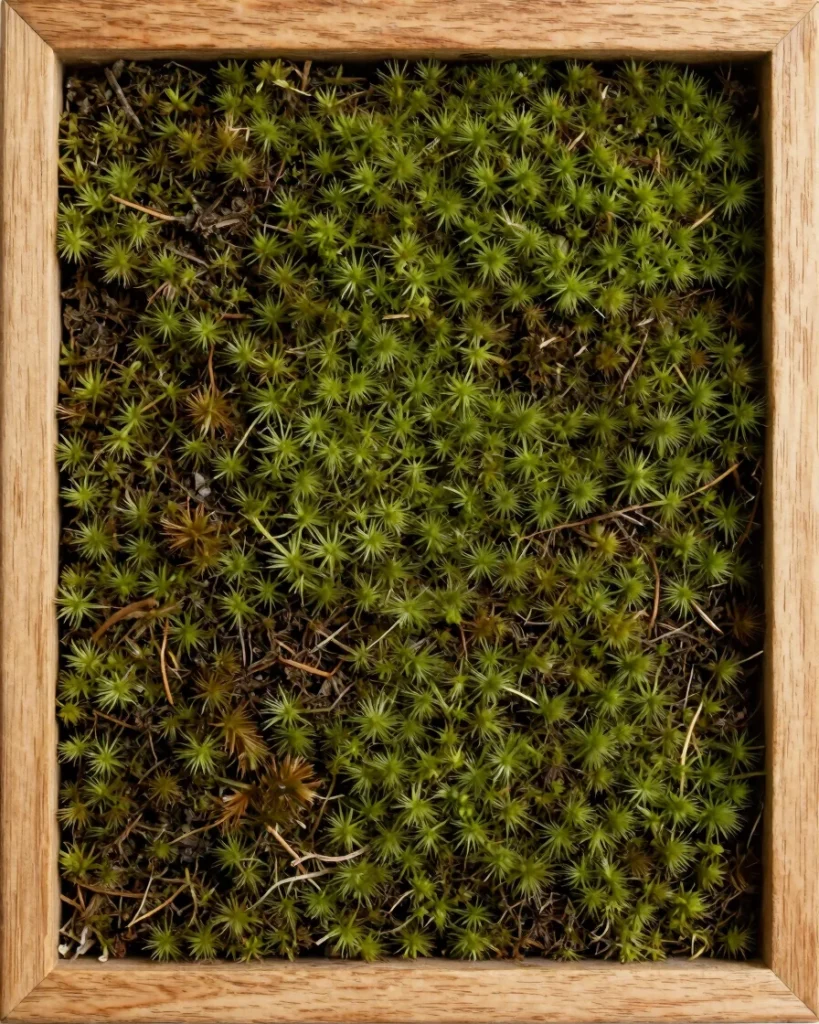
The Light Check: Keep It Out of Direct Sun
Sunlight is the fastest enemy of color stability in preserved moss. Ultraviolet rays break down the dyes and natural pigments used in the preservation process. A piece placed in a south-facing window may show noticeable fading within six months. The fix is simple: position the art where it receives indirect or filtered light. A wall opposite a window, or one that gets morning light only, works well. If the room has strong afternoon sun, consider a sheer curtain or UV-filtering glass.
The Humidity Check: Balance, Not Dryness
Preserved moss is not entirely immune to its surroundings. Very dry air can cause the glycerin to evaporate over time, making the moss feel stiff and brittle. Very humid air can encourage condensation on the surface, which may lead to mold growth on the backing board. The ideal indoor environment for preserved moss is a relative humidity between 40% and 60%. Most homes already sit in this range. If you live in a particularly dry climate, a small room humidifier nearby helps. In humid bathrooms or kitchens, good airflow is more important. A gentle fan or an open window during cooking keeps the air moving and prevents moisture from settling on the art.
The Airflow Check: Avoid Stagnant Corners
Preserved moss does not breathe like a plant, but it does respond to the air around it. In a closed room with no ventilation, dust particles settle on the moss fibers more quickly. Over time, that dust layer dulls the color and traps any airborne grease or smoke. A room with natural airflow, even just a ceiling fan on low, keeps the dust load lower and extends the time between cleanings. Avoid placing the art directly above a heat vent, radiator, or air conditioner outlet, as rapid temperature changes can cause the glycerin to separate from the fibers.
The Dust Check: A Soft Brush Does the Job
Dust is the most common reason a preserved moss piece starts to look tired. Because the moss has a textured surface, dust settles into the crevices and is not easily removed by a quick wipe. The best tool is a soft brush, such as a clean makeup brush, a small paintbrush with natural bristles, or a lens-cleaning brush. Once every two to four weeks, gently sweep the brush across the moss in one direction. This lifts the dust without disturbing the fibers. For larger pieces, a hairdryer on the cool and low setting, held about 30 cm away, can blow dust off the surface. Never use water, cleaning sprays, or vacuum attachments with a rotating brush, as these can damage the preservation layer.

The Color Check: Watch for Fading or Yellowing
Even with good placement, some color change is natural over several years. The moss may shift slightly toward yellow or brown, especially if it was originally a bright green. This is not a sign of decay; it is the aging of the preservation treatment. If you notice uneven fading, check whether one area receives more light than another. Rotating the piece occasionally, or swapping its position with another piece in the room, can even out the exposure. If the moss starts to look dry or dusty despite regular brushing, a very light misting with distilled water can temporarily restore softness. Let it air dry completely before returning it to the wall. Over-misting, however, can lead to moisture damage, so use this only when the moss feels noticeably stiff.
The Backing Board Check: Prevent Hidden Problems
The frame or backing board that holds the moss can develop issues even when the moss itself looks fine. Over time, humidity changes can cause the board to warp slightly. If the art is mounted in a bathroom or near a kitchen, check the back of the piece every few months for any signs of condensation or mold. A small amount of moisture trapped between the board and the wall can lead to staining on the wall surface. If you notice the board feels damp, move the art to a drier room for a week and let it acclimate. In high-moisture areas, consider placing a thin layer of cork or foam between the frame and the wall to allow air to circulate behind the piece.
What to Avoid: Common Mistakes
- Watering or misting regularly. Preserved moss does not need water. Repeated moisture will degrade the glycerin and cause the moss to rot.
- Using chemical cleaners. Window cleaners, furniture polish, or any solvent-based product will strip the preservation treatment and leave a sticky residue.
- Placing near heat sources. Radiators, stoves, and direct heater vents dry out the glycerin and cause the moss to shrink or crack.
- Leaving in a closed, damp space. Bathrooms without ventilation or basements with high humidity can breed mold on the backing board.
- Ignoring dust for months. A thick layer of dust is harder to remove and can trap particles that scratch the moss fibers.
When to Consider a Refresh
Even with the best care, preserved moss will eventually show its age. After three to five years, the color may have softened noticeably, or the texture may feel less plush. At that point, you have a few options. You can replace the moss panel with a fresh piece from the same supplier, or you can treat it as a patina and keep it as is. Some people enjoy the subtle change as part of the art's natural evolution. If the piece is part of a larger arrangement, refreshing just the most faded section can restore balance without replacing the entire wall.

The beauty of preserved moss art is that it offers a preserved texture for indoor spaces with almost no ongoing effort. A few minutes of attention every month, and a little awareness of the room's light and air, is all it takes to keep it looking fresh. No watering schedule, no fertilizer, no pruning. Just the occasional brush, a careful eye on placement, and the peace of mind that comes with knowing your green wall is as low-maintenance as it looks.